
EDITORIAL · THE LEAKED DOCUMENTS · LAND TRANSFERS AND PUBLIC ACCESS
Leaked: Eby’s government plans to transfer about 400 parcels of Crown land to First Nations. To see the plan, you had to sign an NDA and stay silent until after the vote.
Leaked Ministry of Forests documents, marked confidential, propose paying forest companies less when about 400 parcels of Crown land are transferred under treaties and reconciliation agreements. Across 40 pages they never mention public access, recreation, hunting, fishing, roads or trails.
Two Ministry of Forests documents marked confidential were leaked and published by Northern Beat on 15 October.1 They say “approximately 400 parcels” of Crown land are “committed for transfer through Treaty and reconciliation agreements”, and they propose changing the Forest Act so the Province pays forest companies less when that land changes hands.2 Forest companies could see the plan only after signing non-disclosure agreements that run through the campaign, Rob Shaw reports.1 Across 40 pages, the documents never mention public access, recreation, hunting, fishing, roads or trails.23
The Province has answered the access question before, for its own land transfers in the northeast. Its June 2026 Q&A asks: “Can the public still access the lands after transfer?” The answer begins: “After transfer, the land is no longer public.”20 Whether the same answer applies to the 400 parcels, the leaked documents do not say. Premier David Eby, asked about the leak on 15 October, did not address access either. He said the proposal “was about reducing the cost and the burden of these obligations that we have.”4 The cost in question is the compensation the Province pays the forest companies that hold tenure on the land.2
01 The Ministry of Forests’ own backgrounder counts about 400 parcels committed for transfer, and proposes paying forest companies less for them
Northern Beat’s Rob Shaw obtained two Ministry of Forests documents and published them with his column on 15 October.1 The first is a 12-page backgrounder, “Backgrounder and Informational Materials: Forest Compensation Framework”. It opens with the number and the reason.2

The second is the slide deck from a virtual session the ministry’s Tenures & Economics Division held on 10 September 2026, less than two weeks before the election was called.3

The deck also shows how far the plan had gone. Its process slide puts a request for decision to cabinet in July 2026, and marks “We are here” at the next step, a request for legislation in fall 2026, followed by drafting over the winter and a bill in the spring 2027 session.3 Shaw reads that as cabinet approval in July.1 The slide’s own wording for step 3 begins “If the RFD is approved”.3

The heart of the plan is Proposal 1. Today the Forest Act pays a licence holder in full when Crown land is transferred to a First Nation, but pays nothing on the first 5% of its cut lost to roads, pipelines, parks or conservation.56 The backgrounder proposes moving land transfers into the existing 5% threshold for “non-timber production”, the one parks and conservation areas already use.2

The backgrounder has three more proposals. Proposal 2 would extend the rule that reduces compensation by any benefit received to affiliated companies, joint ventures and partnerships. Proposal 3 would set out when First Nations stay eligible for full compensation. Proposal 4 would remove the six-year limit on special purpose areas, to “reduce potential additional compensation requirements that could arise if a Part 15 SPA designation expires.”2
How the compensation rule changes
Now
- When Crown land is set aside for a “first nation purpose”, such as a transfer under a treaty-related agreement, the licence holder is compensated from the first cubic metre of lost harvest.
- When land is set aside for roads, pipelines, power lines, parks or conservation, the holder is compensated only for the part of the loss beyond 5% of the licence’s original allowable annual cut, counted over a period of 15 or 25 years.
- A special purpose area designation lasts up to three years, with one extension of up to three more.
As proposed in the backgrounder
- First Nations land transfers would join the 5% threshold for non-timber production, which parks and conservation already use.
- The six-year maximum on special purpose area designations would be removed.
- The amendment is scheduled for the spring 2027 session of the legislature, if the next government proceeds with it.
The first 5%Under Proposal 1, the first 5% of a licence’s cut lost to First Nations land transfers would go uncompensated, as it already does for roads, pipelines and parks.
6 years → no limitA special purpose area, the designation the Province uses to set land aside from timber licences, now lapses after six years at most. The documents propose removing that cap.
02 The briefings were held in confidence, and Northern Beat reports anyone who wanted to see the plan had to sign an NDA
The deck shows who was in the room. The session was confidential, and attendees were asked to say which First Nation they represented.3 The deck calls this stage consultation and cooperation with First Nations, the process the Declaration Act requires when the Province changes laws that affect them.327 That is the law working as intended.

Written feedback had a deadline, and an inbox to send it to.2 The session’s closing slide extended the deadline to 2 October 2026.3 No public invitation to comment has been found.

Forest companies, according to Shaw, were briefed in early September and had to sign non-disclosure agreements that run through the election before they saw the material. That is his reporting; it is not in the two documents.1 The BC NDP told Northern Beat the documents were “a draft proposal” on which the ministry was seeking feedback from stakeholders.1 Global News reported that the plan was put on hold when the election was called.4

The public has had nothing. There is no engagement on the change on govTogetherBC, the Province’s consultation site, which has stopped updating for the campaign.23 The plan is not in the BC NDP’s forestry platform, released on 14 October, or in its costed platform.7

03 B.C.’s own answer on what happens after a transfer: the land “is no longer public”, and entry needs the First Nation’s permission
The Forests documents say nothing about access, but another ministry has written it down. A June 2026 question-and-answer document from the Ministry of Indigenous Relations and Reconciliation, on Treaty 8 and Site C land transfers in the northeast, says that before transfer the parcels are Crown land and open for hiking, hunting and fishing. After transfer, the answer is one sentence long.20

The same page says the Province will keep public roads and provincial recreation trails open, by excluding them from the transfer or by permit, right of way or easement. Then it qualifies that promise for the roads most backcountry users actually drive.20

The Forest Act explains why that matters. The minister may declare a forest service road only “on Crown land”.21 Once a parcel stops being Crown land, a road across it stays public only if it was held out of the transfer as a Crown corridor or secured by a right of way or easement.20 The Q&A covers the northeast transfers. Whether the same rules govern the 400 parcels has not been said, and the Forests documents do not say.
04 Treaties write your access in. The transfer deals leave it out.
Where public access is protected, it is protected in writing. The Nisga’a, Maa-nulth and Tla’amin treaties follow the same model. The Nation owns its treaty land, but it must allow reasonable public access to land it designates as Public Lands for temporary, non-commercial recreation, including hunting and fishing. It may charge reasonable fees and regulate for safety and habitat. To make land private it must give public notice, and where that would cut off a public route it must provide another one. The Tla’amin treaty also keeps its sections of the Sunshine Coast Trail open to the public.8910
The incremental treaty and land transfer agreements read for this piece contain nothing like it. The K’ómoks agreement of 2017, the shíshálh agreement of 2018 and the Cheslatta agreement of 2023 each convey land in fee simple, subject to the standard Crown reservations and listed encumbrances. None contains a public-access term.151617 The standard reservations in the Land Act cover land for roads, road materials, minerals and existing highways, but not public recreation.19 A road stays out of a Cheslatta transfer only if the parties agree to exclude it.17


The Province has said it intends to keep access in some cases. Its 2019 backgrounder on the Cheslatta agreements said public access to existing recreation and to the lands beyond the transfer “will be maintained”, and its 2020 Lake Babine fact sheet says it “has an interest in maintaining reasonable access”.1718 Those are statements of intent, not terms of the agreements, and the 2014 Lake Babine agreement itself has never been published.18 The Haida Title Lands Agreement of 2024 does not mention public access or recreation at all, and leaves the question to transition schedules that are still being negotiated.14
When the Province wants to promise access, it knows how. The K’ómoks treaty received provincial Royal Assent on 28 May 2026. Its fact sheet says public roads and major resource roads are excluded from treaty lands, and that named places such as Sandy Island, Wildwood Forest, Wood Mountain and Williams Beach stay publicly accessible.1311 The Forests backgrounder points to the same Act, which already treats the impact of its land transfers as “non-timber production”.2 The day before Royal Assent, the minister responsible told the legislature what it meant for access.

Is public access written in?
Only one kind of agreement writes public access in. Nobody has said which of the 400 parcels fall under it.
Modern treaty
Nisga’a 2000 · Maa-nulth 2011 · Tla’amin 2016 · K’ómoks 2026, federal ratification pending
YES — in the treaty
“including reasonable access for the public to hunt and fish”
The Nation owns the land but must allow reasonable public access to its Public Lands, with permits at a reasonable fee. Making land private needs public notice and an alternative route. The Tla’amin treaty keeps the Sunshine Coast Trail open.
Roads Provincial Crown roads stay outside treaty land; K’ómoks excludes public and major resource roads.
Haida title
Rising Tide Haida Title Lands Agreement 2024 · Haida Nation Recognition Act
SILENT
Neither the agreement nor the Act mentions public access or recreation.
Fee simple land continues under provincial law; access is left to transition schedules still being negotiated.
Roads Provincial highways preserved; existing tenures and road dedications continue during the transition.
Incremental treaty and land transfer
K’ómoks ITA 2017 · shíshálh LTA 2018 · Cheslatta LTA 2023
NOT WRITTEN IN
Land passes in fee simple. No public-access term in any of the three.
The Province has stated an intention to keep access in some cases; it is not a term of the agreements.
Roads Highways and agreed roads kept as Crown Corridor; other roads pass with the land.
Northeast transfers
Treaty 8 and Site C · the Province’s Q&A, June 2026
NO LONGER PUBLIC
“After transfer, the land is no longer public.”
Entry onto the land needs the First Nation’s permission.
Roads Public roads and recreation trails kept open; some logging roads “may be closed once their purpose is complete.”
The 400 parcels
≈378of about 400
parcels the government has not identified
≤22named
parcels or areas in the three agreements the NDP pointed to
Up to 22 namedAbout 378 not identified
No list. No map. No word on access.
Nobody has disclosed which of the roughly 400 parcels fall under which kind of agreement. The difference is everything. A parcel under a modern treaty may carry a legal guarantee of public hunting and fishing. A parcel under a land transfer agreement may carry none.
05 Today the Forest Act pays licence holders in full when land goes to a First Nation. The plan would cut that
The backgrounder’s description of the current law checks out against the statute. A transfer of fee simple Crown land to a First Nation under a treaty-related agreement is a “first nation purpose”, compensated in full.5


The Province’s own financial statements say it cannot put a number on the compensation at stake. The 2025/26 Public Accounts list the Crown land committed at treaty tables and then add a line about cost.22

What it is, and what it is not
Read plainly, the documents describe a change to how the Province compensates forest companies for land it has already committed to transfer. They do not create a new land-transfer program. Premier David Eby said on 15 October that the transfers reflect existing commitments, some of them decades old.4 Shaw’s column, an opinion piece, calls it a land-returns plan; that framing is his, and the documents themselves describe Forest Act amendments.12 The BC NDP said some parcels may already be public through the Lake Babine and K’ómoks incremental treaty agreements and the 2023 Cheslatta transfer.1 Of those three, the two whose text is published contain no public-access term.1517
06 Public access is in their promises. It is not in the plan.
The same party that left this plan out of its platform put public access into it somewhere else. Its 30 by 30 commitment promises to protect 30% of the province’s land by 2030 and to “preserve public access”.24

It is not the first time. In January 2024 the Ministry of Water, Land and Resource Stewardship proposed Land Act amendments to allow shared decision-making with Indigenous governing bodies, because, in its own words, the Declaration Act “does not give legal effect to the decision-making power(s) for an agreement”.2627 On 21 February 2024 Minister Nathan Cullen withdrew them. He said he had heard from more than 650 representatives, including snowmobilers, hunters and anglers, and he gave the public an assurance in writing.25

“No impacts to … access to Crown land.”
Nathan Cullen, Minister of Water, Land and Resource Stewardship · 21 February 2024
A government that has twice put public access in writing, in a ministerial statement and in a platform, can put it in the plan for 400 transfers. So far it has not.
07 The leaked deck puts land transfers in the same uncompensated 5% as new parks and conservancies, which ties the plan to 30 by 30
The leaked deck itself ties the land transfers to protected areas. Proposal 1 would put transfers in the same 5% non-compensable threshold for “non-timber production” that parks and conservancies already use, and the ministry lists what that means.23

Parks and conservancies are how B.C. means to reach 30 by 30. Under the Tripartite Framework Agreement on Nature Conservation, whose signing with Canada and the First Nations Leadership Council was announced on 3 November 2023, B.C. committed to protect at least 30% of its land base by 2030 through “any combination of federal, provincial, municipal, or Indigenous-led protected areas, and OECMs”, the other effective conservation measures that the national database counts. Each area needs “B.C. Cabinet and Treasury Board approval to confirm funding requirements to address existing tenures”: the cost of buying out the same kind of rights the leaked documents set out to compensate less.34

The agreement’s own annual report shows how far there is to go. Protected areas and OECMs covered 18,835,968 hectares, 19.9% of the province, in the 2024 national database. Reaching 30% of B.C.’s 94,498,991 hectares means about 9.5 million more hectares by 2030. The report says the year’s gain of 0.2% was “fully attributed to the contributions provided by local levels of government and land trusts”, and that Indigenous Protected and Conserved Areas “may also contribute to the target”.35 Whether any of the 400 parcels will be reported toward 30 by 30, as an Indigenous-led protected area or otherwise, the leaked documents do not say.

Land trusts are already part of the count. The Nature Conservancy of Canada, a registered charity, is named in the agreement’s annual report as the steward of the Kootenay Forest Lands.3935 The Province’s Public Accounts record government transfers to it from the Ministry of Water, Land and Resource Stewardship, the ministry that signed the Tripartite agreement for B.C.: $15,000,000 in 2023/24, and $7,000,000 and $1,500,000 in 2025/26. The schedules do not say what the payments bought.3634 The $7 million matches the provincial share reported for the Kootenay Forest Lands, 45,000 hectares now under NCC’s stewardship.3735 Part 2 of this series follows that money.

On land bought this way, public access is decided by the owner, after the purchase. NCC says recreation access at the Kootenay Forest Lands “will continue” and that its management “will balance recreation with the conservation vision”.3537 At Darkwoods, its 63,000-hectare conservation area in the West Kootenay, the rules are already written.38 In a provincial conservancy, hunting is not allowed unless the conservancy is listed in a schedule to the regulation.40

08 One government, four ways the public loses the backcountry
The leak is not the only record of its kind. Put it beside the other records this site has published this fall and the same government appears four times, through two ministries. Each time, the public’s way in is decided somewhere the public is not.
Same governmentTwo ministries · four records
Forests · the leak
~400 parcels
Committed for transfer, with a proposal to pay licence holders less and a bill scheduled for spring 2027.
Russ Laroche · Selkirk / Kootenay Boundary
290 km retired
Forest service road off the region’s register since January 2022, 85% of it in Selkirk. Rady Creek: “ATV”, then “NO ACCESS”.
Randene Neill · M236
No expiry date
Signed 15 June 2026 as B.C. Reg. 97/2026. The snowmobile clubs’ permits became fixed closures.
AccessClosed by regulation45
Two ministries, four records, one result: the public’s way in is decided somewhere the public is not. At Rady Creek, a 2021 briefing note records the caribou program backing an end to motorized access, on a recommendation the note says rested on environmental and public safety risks.4243 And the ministry that signed the 30 by 30 agreement for B.C. has paid more than $24 million to a charity whose land counts toward the target.34353646
Decisions about public land are made in confidential sessions, framework agreements, Treasury Board submissions, ministerial orders and transfers to a charity. In none of them is public access part of the decision.
No document ties the leak to the NCC payments, and none is needed: the pattern is the point, and it concerns public access, not the Nations’ rights to their land.
The questions the government has not answered
- Who decided? Who approved the request for decision on the Forest Act change in July 2026, and who approved each road closure and order above?
- Where was the public process? The Forests plan went to First Nations and, Shaw reports, to forest companies. The public was not consulted.
- Why does none of these documents mention public access? Not the leaked backgrounder, not the deck, not the 30 by 30 agreement.
- Why does the money move through a charity? And who decides access on the land it buys with public funds?
- What was the $15 million for? The Public Accounts record the payment to the Nature Conservancy of Canada and do not say.
- Which of the 400 parcels, if any, will be counted toward 30 by 30?
09 Three NDP ministers share this file: Ravi Parmar at Forests, Spencer Chandra Herbert at Indigenous Relations and Randene Neill at Water, Land and Resource Stewardship
The leaked documents name their author, the Ministry of Forests’ Tenures & Economics Division, and two other ministries share the file.3


Ravi Parmar
Minister of Forests · DM Makenzie Leine
What they own
His ministry wrote the leaked documents.
It ran the confidential 10 September session on the amendments.3
It administers the Forest Act: the compensation rules, and forest service roads, declared only on Crown land.621
Photo: Province of British Columbia
On the ballot: Langford-Highlands · 24 Oct

Spencer Chandra Herbert
Indigenous Relations and Reconciliation · DM Alex MacLennan
What they own
His ministry’s Q&A: transferred land is “no longer public”.
It negotiates the agreements the parcels come from.32
Its June 2026 Q&A on the northeast transfers.20
In May he told the legislature: “K’ómoks public land — public access would continue.”12
Photo: BC NDP
On the ballot: Vancouver-West End · 24 Oct

Randene Neill
Water, Land and Resource Stewardship · DM Lori Halls
What they own
Her ministry paid NCC $24.27M and signed the 30 by 30 deal.
She signed M236, which closed South Peace sledding by regulation.45
Her ministry led the 2024 Land Act proposal, withdrawn with a promise on access.2625
Photo: Province of British Columbia
On the ballot: Powell River-Sunshine Coast · 24 Oct
All three are candidates in the election scheduled for 24 October.3233 Each can say before then whether the 400 transfers will carry public access.
10 Eby says the transfers reflect existing commitments. Here is what he and the other leaders have said
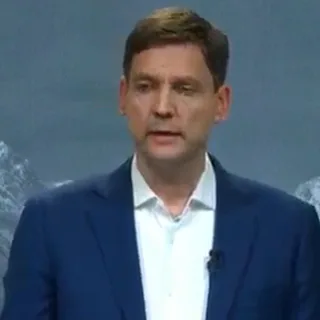
David EbyBC NDP leader · to Global News, 15 Oct
“The challenge that we face as a government is that there’s a very significant fiscal cost associated with transferring those tenures to First Nations under these agreements”4
Still: CBC News / BC Broadcast Consortium
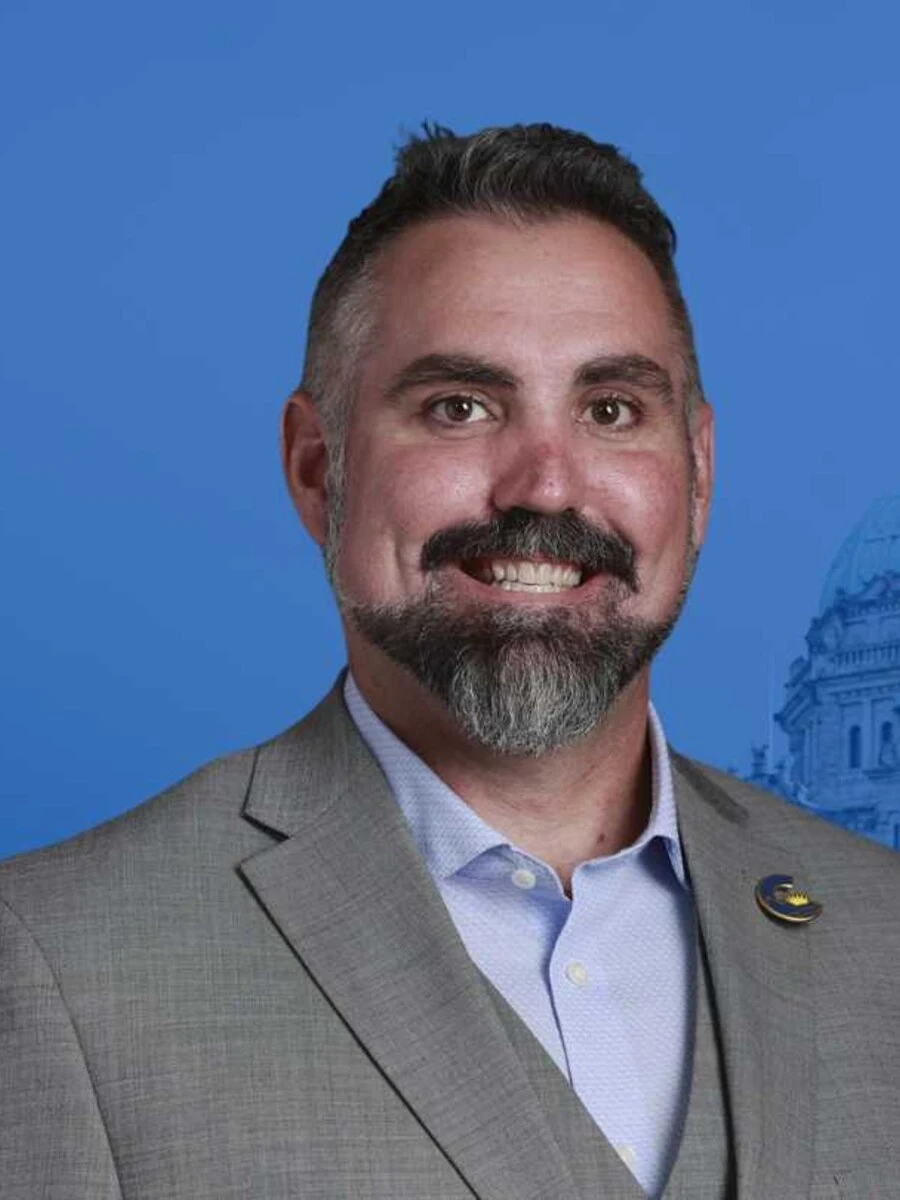
Scott McInnisConservative candidate · to Global News, 15 Oct
“This is nothing new for this government to make these very important decisions around Crown land and First Nations and not tell anybody about it”4
Photo: Conservative Party of BC
Lorne DoerksonInterim Conservative leader · on repealing DRIPA
“There has to be a better path forward and that is through respect and relations and certainly partnerships with First Nations in this province.”4
Still: CBC News / BC Broadcast Consortium

Emily LowanBC Green leader · leaders’ debate, 14 Oct
“DRIPA has no bearing on private property.”30
Still: CBC News / BC Broadcast Consortium
Doerkson had not commented on the leaked documents by 15 October; his words above are on DRIPA, which he has said his party would repeal. The Greens had not responded to the documents.430 No province-wide First Nations organization had commented by 15 October. On 23 September the BC Assembly of First Nations asked every party to abandon “divisive culture war rhetoric”.31
Aboriginal rights and title are protected by section 35 of the Constitution, and transfers under treaties and reconciliation agreements are how governments meet obligations they have negotiated. The Nations’ rights to this land are not the question here. Access is. Two court cases frame the wider debate. In Gitxaala, the B.C. Court of Appeal held in December 2025 that DRIPA gives the UN Declaration immediate legal effect in B.C. law, and the Supreme Court of Canada granted leave to appeal on 21 May 2026.28 In Cowichan, the B.C. Supreme Court found Aboriginal title over part of the land claimed in Richmond in August 2025, and the ruling is under appeal.29 Neither case concerns the 400 parcels.
11 How the plan moved from a request to cabinet in July 2026 toward a bill in spring 2027
- 23 Feb 2017
The K’ómoks Incremental Treaty Agreement is signed. Its two parcels pass in fee simple with no public-access term.15
- 4 Oct 2018
The shíshálh Land Transfer Agreement keeps highways out of the transferred parcels as Crown Corridor.16
- 28 Nov 2019
The Declaration on the Rights of Indigenous Peoples Act becomes law.27
- 28 Aug 2023
The Cheslatta land transfer takes effect, with no public-access term.17
- 3 Nov 2023
Canada, B.C. and the First Nations Leadership Council announce the Tripartite Framework Agreement on Nature Conservation, with a target of protecting at least 30% of B.C.’s land by 2030.34
- 21 Feb 2024
Minister Nathan Cullen withdraws the proposed Land Act amendments.25
- 2024
The Haida Title Lands Agreement is signed, and the Haida Nation Recognition Act is amended.14
- 7 Aug 2025
The B.C. Supreme Court rules in Cowichan. The decision is under appeal.29
- 5 Dec 2025
The B.C. Court of Appeal rules in Gitxaala.28
- 21 May 2026
The Supreme Court of Canada grants B.C. leave to appeal Gitxaala.28
- 27 May 2026
Minister Spencer Chandra Herbert tells the legislature that public access to K’ómoks public land “would continue.”12
- June 2026
The northeast transfers Q&A says that after transfer “the land is no longer public.”20
- July 2026
A request for decision on the compensation change goes to cabinet, according to the Ministry of Forests process slide. Shaw reports that it was approved.31
- Early Sep 2026
Forest companies are briefed after signing non-disclosure agreements that run through the election period, Shaw reports.1
- 10 Sep 2026
The Ministry of Forests holds a confidential virtual session on the amendments with First Nations.3
- 25 Sep 2026
The backgrounder’s deadline for written feedback, later extended to 2 October.23
- 22 Sep 2026
- 14 Oct 2026
The BC NDP releases its forestry platform. It does not mention the plan.7
- 15 Oct 2026
Northern Beat publishes Rob Shaw’s column and the two documents, and Eby responds.1
- 24 Oct 2026
The general election is scheduled for this date.33
- Spring 2027
The bill is scheduled for introduction in this session, according to the Ministry of Forests process slide.3
12 Before 24 October, ask your candidates to commit to three things about the 400 parcels
The agreements behind the 400 parcels have been signed or negotiated, and the Nations’ rights to that land are not in question. What is still open is whether the people who use the backcountry will be told, before each parcel changes hands, which roads and trails stay open. The Ministry of Forests wrote 40 pages on this plan without a word about them. The candidates on the ballot on 24 October can fix that.
Three commitments to ask for
- Publish each parcel’s access terms before any transfer. For each of the roughly 400 parcels, say which agreement covers it and what public access, if any, it will keep.
- Keep resource roads and trails open. Hold them out of transfers as Crown corridors, or carry the modern treaties’ public-access designation into every agreement, with another route wherever one is cut.
- Consult the public on the Forest Act change. Open it to public comment before a bill is introduced, alongside the consultation with First Nations.
Share this story
Six images to share, each built on one document.


Suggested caption
Leaked: Eby’s government plans to transfer about 400 parcels of Crown land to First Nations. To see the plan, you had to sign an NDA and stay silent until after the vote.
Two Ministry of Forests documents, published by Northern Beat on 15 October, propose cutting what the Province pays forest companies when that land is transferred. Across 40 pages they never mention public access, recreation, hunting, fishing, roads or trails.
That answer, from a June 2026 Q&A, covers only the northeast transfers, and the same page says some logging roads “may be closed”. Modern treaties write in public access for hunting and fishing; the land transfer agreements we read do not.
The leaked deck also says the change “may impact other initiatives, such as establishment of parks/conservancies”, the land B.C. counts toward its 30 by 30 promise.
The Nations’ rights to the land are not in question; the roads and trails across it are. Ask your candidates to publish each parcel’s access terms before any transfer, to keep resource roads and trails open, and to consult the public on the Forest Act change.
backcountry.cx/editorials/land-returns-public-access/
#BCpoli #BCElection #PublicLand #PublicAccess #CrownLand
Sources
- ↩ Rob Shaw, Northern Beat, “Rob Shaw: Secret documents reveal BC NDP government ‘Land Returns’ plan for First Nations,” column (opinion), 15 October 2026. It reports that forest companies were briefed under non-disclosure agreements, and it carries the BC NDP’s statement to Northern Beat. The column links to the two Ministry of Forests documents, published on Google Drive and cited here directly. northernbeat.ca
- ↩ Ministry of Forests, “Backgrounder and Informational Materials: Forest Compensation Framework”, 12 pages, watermarked confidential: page 1 (about 400 parcels, the fiscal rationale, and the written-feedback deadline of 25 September 2026), pages 4 and 5 (Proposal 1, the 5% threshold, and the K’ómoks and Kitselas Treaty Acts) and pages 6 to 12 (Proposals 2 to 4). Document published by Northern Beat on Google Drive. A text search finds no mention of public access, recreation, hunting, fishing, roads or trails. drive.google.com (PDF)
- ↩ Ministry of Forests, Tenures & Economics Division, “Virtual Session 2: Proposed Forest Act Compensation Amendments”, slide deck, 10 September 2026, 28 slides: slide 1 (title), slide 2 (confidentiality and attendees’ First Nation), slide 6 and slide 26 (the legislative process), slide 15 (implications of Proposal 1) and slide 28 (feedback deadline extended to 2 October 2026). Document published by Northern Beat on Google Drive. A text search finds no mention of public access, recreation, hunting, fishing, roads or trails. drive.google.com (PDF)
- ↩ Amy Judd, Global News, “BC NDP defends actions after reports about a secret land deal,” 15 October 2026: the report that the plan was put on hold when the election was called, David Eby’s response, Scott McInnis’s criticism, and the leaders’ debate exchange on DRIPA. globalnews.ca
- ↩ Forest Act, R.S.B.C. 1996, c. 157, Part 15 (Special Purpose Areas): section 182 (2) (a), the “first nation purpose” of disposing of fee simple Crown land to a First Nation under a treaty-related, interim or economic measures agreement; section 183 (2), a designation’s cancellation date “must not be more than 3 years after the effective date”; and section 184, a single extension of no more than 3 years. Current to 6 October 2026. bclaws.gov.bc.ca
- ↩ Forest Act, Part 16 (Compensation in Relation to Special Purpose Areas): section 227 (deletion periods of 15 or 25 years); sections 233 and 240 (compensation for reductions and deletions for other special purposes, with no threshold); and sections 231, 232, 234, 235, 238 and 239, under which compensation for access and non-timber purposes is paid only on the amount that “exceeds 5% of the original allowable annual cut”. bclaws.gov.bc.ca
- ↩ BC NDP, “Eby Outlines Next Steps for Forestry,” 14 October 2026, which does not mention land transfers, tenure compensation or the Forest Act; and the party’s costing release for its platform, 14 October 2026, which does not mention them either. forestry release · costing release
- ↩ Nisga’a Final Agreement, Chapter 6, Access, paragraphs 1 to 14: reasonable public access to Nisga’a Public Lands for temporary non-commercial and recreational uses, reasonable public hunting and fishing opportunities, permits at a reasonable fee, and notice and alternative access before land is designated private. bclaws.gov.bc.ca
- ↩ Maa-nulth First Nations Final Agreement, Chapter 5, Access, section 5.4.1 (“reasonable public access … including reasonable opportunities for the public to hunt and fish”) and sections 5.2.2 to 5.2.5 (notice and alternative access); and Chapter 7, Crown Corridors and Roads, section 7.1.1. Chapter 5 · Chapter 7
- ↩ Tla’amin Final Agreement (federal consolidation), Chapter 5, Access: paragraph 8 (reasonable public access to Tla’amin Public Lands for temporary recreational and non-commercial purposes, “including reasonable access for the public to hunt and fish”) and paragraphs 27 to 31 (the Sunshine Coast Trail); and Chapter 6, paragraphs 11 and 12 (Provincial Crown Roads are not Tla’amin Lands). rcaanc-cirnac.gc.ca
- ↩ Province of British Columbia, K’ómoks Treaty: Lands and Access fact sheet, 14 April 2026: most treaty land to be designated private, public roads and major resource roads excluded from treaty lands, and named sites, including Sandy Island and Seal Islets, Wildwood Forest, Wood Mountain and Williams Beach, to remain publicly accessible. engage.gov.bc.ca (PDF)
- ↩ Hansard, B.C. Legislative Assembly, Issue 186, 27 May 2026 (afternoon), committee on the K’ómoks Treaty Act: Minister Spencer Chandra Herbert, “K’ómoks public land — public access would continue.” leg.bc.ca
- ↩ BC Treaty Commission, “B.C. K’ómoks Treaty Act Ratified,” 29 May 2026: Royal Assent on 28 May 2026, with federal ratification still to come. bctreaty.ca (PDF)
- ↩ Gaayhllxid • Gíihlagalgang “Rising Tide” Haida Title Lands Agreement, 2024: sections 4.4 to 4.10 (fee simple interests continue under provincial jurisdiction), 4.11 (existing tenures and road dedications continue during the transition) and 4.15 to 4.16 (public services and provincial highways); the agreement does not use the words “access” or “recreation”. And the Haida Nation Recognition Act, S.B.C. 2023, c. 24, as amended in 2024. agreement (PDF) · Act
- ↩ K’ómoks Incremental Treaty Agreement, signed 23 February 2017: two parcels transferred in fee simple, subject to the standard reservations and listed encumbrances, with no public-access term; before transfer the Province was to investigate roads, access to neighbouring land and Crown corridors. The published copy is a scanned image and was read by text recognition. gov.bc.ca (PDF)
- ↩ shíshálh Nation Land Transfer Agreement, 4 October 2018: three parcels in fee simple, subject to the Land Act section 50 (1) reservations and listed encumbrances, with highways kept as “Crown Corridor” (section 7.3) and no public-access term. gov.bc.ca (PDF)
- ↩ Cheslatta Carrier Nation, “Footprints Back on Our Land” Group 1 Land Transfer Agreement, effective 28 August 2023: seven areas totalling about 1,345 hectares in fee simple, excluding “Crown Corridor” (highways and other agreed roads and rights of way), with no public-access term; and the Province’s 2019 backgrounder, which says public access to existing recreation and to lands beyond the transfer “will be maintained”. agreement (PDF) · backgrounder (PDF)
- ↩ Province of British Columbia, Lake Babine Nation Foundation Agreement fact sheet, September 2020: when negotiating land transfers, the Province “has an interest in maintaining reasonable access” for the public, residents, guide outfitters and trapline holders; and Lake Babine Nation’s Incremental Treaty Agreement summary, which gives 13 parcels and 510 hectares. The 2014 agreement itself is not published. fact sheet (PDF) · lbntreaty.com
- ↩ Land Act, R.S.B.C. 1996, c. 245, section 50: the reservations in every Crown grant (land for roads, materials for roads, minerals, and existing highways). It contains no general reservation of public recreational access. bclaws.gov.bc.ca
- ↩ Ministry of Indigenous Relations and Reconciliation, Treaty Land Entitlement and Site C Agreement Land Transfers in Northeast B.C., Part 2: Questions & Answers, updated June 2026, pages 11 and 12: “After transfer, the land is no longer public”, public roads and provincial recreation trails kept open “by excluding the roads or trails, or by providing road permits, statutory right of ways, or easements”, and “Some roads built for resource activities, such as logging, may be closed once their purpose is complete.” engage.gov.bc.ca (PDF)
- ↩ Forest Act, Part 8, section 120.1 (1): “The minister may declare a road on Crown land to be a forest service road”. bclaws.gov.bc.ca
- ↩ Province of British Columbia, Public Accounts 2025/26, Note 28, Contingent Liabilities and Contractual Obligations, “Treaty Negotiations”, pages 82 and 83: treaties and incremental agreements “may result in compensation to third parties. Those costs are not determinable at this time.” gov.bc.ca (PDF)
- ↩ Province of British Columbia, govTogetherBC, read 15 October 2026: no engagement on the Forest Act compensation change, and the notice that “Due to the provincial election period, this site is not being updated except for emerging public health and safety information or topics that are statutory in nature.” engage.gov.bc.ca
- ↩ BC NDP, “Build B.C. Strong” platform commitments, which promise to “protect 30% of B.C.’s land by 2030, conserve the environment, protect wildlife habitat, and preserve public access.” bcndp.ca
- ↩ Province of British Columbia, statement by Nathan Cullen, Minister of Water, Land and Resource Stewardship, on the Land Act, 21 February 2024: he had consulted more than 650 representatives, including snowmobilers, hunters and anglers; there would be “no impacts to tenures, renewals, private properties or access to Crown land”, and “our government has decided not to proceed with proposed amendments to the Land Act.” news.gov.bc.ca
- ↩ Ministry of Water, Land and Resource Stewardship, Land Act amendments engagement slides, 12 January 2024: “The Declaration Act does not give legal effect to the decision-making power(s) for an agreement, so amendments are required”. engage.gov.bc.ca (PDF)
- ↩ Declaration on the Rights of Indigenous Peoples Act, S.B.C. 2019, c. 44, sections 1 (3), 3, 6 and 7, unamended as of 6 October 2026. bclaws.gov.bc.ca
- ↩ Gitxaala v. British Columbia (Chief Gold Commissioner), 2025 BCCA 430, 5 December 2025; and Supreme Court of Canada docket 42200, leave to appeal granted 21 May 2026. bccourts.ca · scc-csc.ca
- ↩ Cowichan Tribes v. Canada (Attorney General), 2025 BCSC 1490, 7 August 2025 (corrected judgment); and the City of Richmond’s notice of appeal, 4 September 2025. Canada and British Columbia have also appealed. bccourts.ca · richmond.ca
- ↩ CBC News, B.C. leaders’ debate live coverage, 14 October 2026, including Emily Lowan: “DRIPA has no bearing on private property.” cbc.ca
- ↩ BC Assembly of First Nations, “Provincial Election: BCAFN calls on all parties to abandon divisive culture war politics and to present human rights commitments to the benefit of all British Columbians,” 23 September 2026. bcafn.ca
- ↩ Province of British Columbia, Cabinet ministers (updated 8 September 2026) and Deputy ministers (6 July 2026): Spencer Chandra Herbert and Alex MacLennan, Indigenous Relations and Reconciliation; Ravi Parmar and Makenzie Leine, Forests; Randene Neill and Lori Halls, Water, Land and Resource Stewardship. ministers · deputy ministers
- ↩ Elections BC, 2026 Provincial General Election candidates (Spencer Chandra Herbert, Vancouver-West End; Ravi Parmar, Langford-Highlands; Randene Neill, Powell River-Sunshine Coast; all BC NDP) and the 2026 Provincial Election page: writ day 22 September 2026 and Final Voting Day scheduled for 24 October 2026. candidates (CSV) · elections.bc.ca
- ↩ Canada, British Columbia and the First Nations Leadership Council, Tripartite Framework Agreement on Nature Conservation, signing announced 3 November 2023; agreement text as published by the Province (archived copy, November 2024): section 4.1 (b) and section 6.4.1 (protect “at least 30% of B.C.’s land base by 2030” through “any combination of federal, provincial, municipal, or Indigenous-led protected areas, and OECMs”), and section 6.3 (each area requires the free, prior and informed consent of the appropriate title and rights holders and “B.C. Cabinet and Treasury Board approval to confirm funding requirements to address existing tenures and mitigate socio-economic impacts”). A text search of the agreement finds no mention of public access, recreation or hunting. The Province’s page puts the combined commitment at over $1 billion. gov.bc.ca · canada.ca
- ↩ Province of British Columbia, Tripartite Framework Agreement on Nature Conservation, Annual Report 2024/25 (published 2026): “Getting to 30% x 2030” (land trusts “also report into CPCAD”; the year’s gain of 0.2% was “fully attributed to the contributions provided by local levels of government and land trusts”; IPCAs “may also contribute to the target”), the progress table (protected areas and OECMs 18,835,968 hectares, 19.9% of 94,498,991 hectares, from the 2024 CPCAD), and the Kootenay Forest Lands profile (“Under the stewardship of the NCC”; “Public recreation access will continue”). gov.bc.ca (PDF)
- ↩ Province of British Columbia, Public Accounts, Consolidated Revenue Fund Detailed Schedules of Payments, Government Transfers, The Nature Conservancy of Canada: $15,000,000 from Water, Land and Resource Stewardship in 2023/24 (page 642), and $7,000,000 and $1,500,000 from the same ministry in 2025/26. The schedules do not say what the payments were for. 2023/24 (PDF) · 2025/26 (PDF)
- ↩ Black Press, “Historic 45,000-hectare land conservation buy confirmed for southeastern B.C.”, 17 December 2025: Canada and Elk Valley Resources each about $20 million, and the provincial government $7 million; and the Nature Conservancy of Canada’s Kootenay Forest Lands page (“NCC’s management will balance recreation with the conservation vision for the land”). theprogress.com · natureconservancy.ca
- ↩ Nature Conservancy of Canada, Darkwoods Conservation Area project page, read 15 October 2026: 63,000 hectares, conserved in 2008 and expanded in 2019; “accessible for low impact recreational day use from July through September. Permits are required for entry. Camping, off-road vehicles, snowmobiles, fires, trapping and cutting firewood on the property are prohibited.” A visitor without a permit “will be trespassing”. natureconservancy.ca
- ↩ Canada Revenue Agency, List of charities: Nature Conservancy of Canada, registered charity, business number 119246544RR0001. NCC is a Canadian charity and is a separate organization from Nature United, the Canadian affiliate of The Nature Conservancy (U.S.). cra-arc.gc.ca
- ↩ Park, Conservancy and Recreation Area Regulation, B.C. Reg. 180/90, sections 28 and 29: a firearm, bow or crossbow may be discharged in a park, conservancy or recreation area only during an open season in those areas listed in Schedule B, or as authorized by a park officer. bclaws.gov.bc.ca
- ↩ Backcountry Coalition, “Russ Laroche, Kootenay Boundary”: analysis of the Province’s Forest Tenure Road Section Lines open data (all 286,220 records, retrieved 14 October 2026). Since 1 January 2022, 290 km of forest service road in the Kootenay Boundary region has been retired from the register, 85% of it in the Selkirk Natural Resource District. Russ Laroche is the Ministry of Forests’ Regional Executive Director for the Kootenay Boundary (B.C. Government Directory). backcountry.cx · catalogue.data.gov.bc.ca
- ↩ Ministry of Forests, Selkirk Natural Resource District, “Rady FSR Permanent Deactivation Summary Table”, FSR 0321.02: the version prescribed 7 October 2020 reads “Access Level Remaining after Deact: ATV”; the revision of 11 May 2021 reads “Access Level Remaining after Deact: NO ACCESS”. Released to a local recreation club in July 2021 and reproduced in the Laroche editorial. backcountry.cx
- ↩ Ministry of Forests, briefing note from the Selkirk District Manager to the then Regional Executive Director, 6 July 2021, freedom-of-information release to Backcountry Coalition, page 402 of 1,410: “The Caribou Program and Region 4 strongly support not providing snowmobile or ATV access as part of the deactivation of Rady Creek”. The note adds that the recommendation to fully deactivate “is based on the environmental and public safety risks of this road.” Russ Laroche is not named in it. backcountry.cx
- ↩ Email from Russ Laroche, Regional Executive Director, Ministry of Forests, 8 October 2026, subject “Re: Rady creek path forward”, replying to a recreation club: “We will not be engaging with any group or individual involved in furthering this vexatious activity.” Correspondence on file, reproduced in the Laroche editorial. backcountry.cx
- ↩ Province of British Columbia, Ministerial Order M236, Wildlife Act, signed by Randene Neill, Minister of Water, Land and Resource Stewardship, 15 June 2026, deposited as B.C. Reg. 97/2026 and effective 1 July 2026: it replaces the South Peace snowmobile-club permit system with fixed closures under the Motor Vehicle Prohibition Regulation. See also the Backcountry Coalition editorial on the South Peace closures. bclaws.gov.bc.ca (PDF) · backcountry.cx
- ↩ Province of British Columbia, news release 2024WLRS0033, Old Growth Nature Fund land acquisitions: “Kwiakah, Phillips Arm (Central Coast); 75 hectares; Nature Conservancy of Canada; $573,461 (total cost: $1,274,359)”; and the 2023/24 Public Accounts schedule, which records $573,461 to the Nature Conservancy of Canada from Water, Land and Resource Stewardship. news.gov.bc.ca
Every source was read on 15 October 2026. The two Ministry of Forests documents were read in the copies Northern Beat published on Google Drive.