EDITORIAL · THE NDP’S COSTED PLAN · THE BACKCOUNTRY
Eby’s costed plan has $0 for backcountry roads, rec sites or Target 8, and it barely moves the deficit.
The BC NDP’s two-page costing, released hours before the 14 October debate, drops the party’s 2024 promise to fund access roads and trails, keeps Budget 2026’s cut to BC Parks and Recreation Sites and Trails, and gives Target 8 of the government’s own recreation strategy no money, no date and no owner. Its deficits land within about $18 million a year of the forecast the Finance Ministry had already published, and they lean on an unexplained major-projects revenue line and a tax yield that independent economists say is too high.
The BC NDP published its costing on the afternoon of 14 October, a few hours before the only televised debate of the campaign. That evening David Eby called it “a fully costed platform.” It is costed in the narrow sense that every line adds up. Read against the government’s own books, it changes almost nothing about where the province’s finances are headed, it drops several of the party’s 2024 promises, and it leaves the backcountry out entirely.128
01 What the plan is: two pages, three years, no debt path
The “BC Strong Fiscal & Costing Plan” is a two-page PDF. Its file on the party’s server was last modified at 12:27 p.m. on 14 October, the first wire story appeared at 3:40 p.m., and the debate began at 6:15 p.m.13 It covers three operating years, 2026/27 to 2028/29, and adds a five-year list of capital projects. It has no debt path, no debt-to-GDP figure, no interest line and no year in which the budget balances.
By its third year the plan raises $1.84 billion a year in new revenue and spends $1.26 billion. Most of the revenue comes from two lines: a higher income tax on the top 3.88% of earners, and a line called “Targeted Economic Growth (Major Project FIDs),” which counts revenue from projects that have reached, or are expected to reach, a final investment decision. On the spending side, health care takes six lines, a one-year gas-tax suspension costs $280 million, and the single largest line in each of the last two years is “Measures To Be Announced.” Every subtotal reconciles. The one slip is the capital net, which prints as $14 million when the arithmetic gives −$13.9 million.1
$1.84B in, $1.26B outNew revenue and new spending in 2028/29, the plan’s last operating year. In every year the largest single revenue source after the income tax is an unexplained line for major-project investment decisions.
02 It leaves the deficit within about $18 million a year of the Ministry’s forecast
The plan starts from the Ministry of Finance’s First Quarterly Report of 14 September and subtracts the revenue from the PST expansion on professional services, which the government paused in September after booking it in Budget 2026.456 The platform’s net gain of $268 million, $551 million and $581 million then roughly replaces that lost revenue. What is left is the Ministry’s own deficit path, give or take $18 million.1
| $ millions | 2026/27 | 2027/28 | 2028/29 |
|---|---|---|---|
| Ministry’s First Quarterly Report, 14 Sep 2026 | −13,759 | −12,671 | −11,988 |
| less the PST expansion it paused in September | −261 | −534 | −563 |
| = the NDP’s baseline | −14,020 | −13,205 | −12,551 |
| + the platform’s net | +267.6 | +551.4 | +581.2 |
| = the deficit with the platform | −13,752.4 | −12,653.6 | −11,969.8 |
| Difference from the Ministry’s own forecast | +6.6 | +17.4 | +18.2 |
The fall from $13.8 billion to about $12.0 billion that led the coverage of the costing, “deficit fall to $12B in two years,” is therefore already in the Ministry’s September forecast. The platform does not produce it.3 In 2024 the party said it was “on a path to return BC to balance.” In 2026 it names no year.8
Here are six forecasts of this year’s deficit since February 2024. Each new budget has put it deeper than the last.
−$6.3B → −$13.8BThe deficit for this fiscal year, 2026/27, as each forecast put it. The 2026 costing lands $6.6 million from the Ministry’s September figure.
The record has one point in the government’s favour. Actual results have come in better than budgeted: by $564 million in 2024/25 and by $3,212 million in 2025/26, although the second figure includes $2,561 million of one-time tobacco-settlement revenue.7 The plan also keeps the $5.0 billion Contingencies vote that Budget 2026 carries in each year, though like every budget since 2023 it carries no forecast allowance.5
03 Against the 2024 platform: what is new, what changed and what was dropped
The party’s 2024 platform, “An Action Plan for You,” carried its own costing table. Set beside it, the 2026 plan raises taxes the 2024 plan ruled out, abandons its two biggest household promises, and drops the one commitment that reached the backcountry.81
| Item | 2024 platform, 3 Oct 2024 | 2026 costing, 14 Oct 2026 | Status |
|---|---|---|---|
| The $1,000 household rebate and middle-class tax cut | Exempt another $10,000 of income from B.C. tax, paid in the first year as a $1,000 rebate per household and $500 per person. Costed at $1.8 billion of revenue in 2025/26.8 | Paused on 13 February 2025, before a dollar was paid, and reported as cancelled. Budget 2026 then raised the lowest tax rate from 5.06% to 5.60%. The 2026 costing has no rebate and no cut.95 | DROPPED |
| Income tax on top earners | “Will not … raise taxes on hardworking middle-income people.” It proposed no income-tax increase. | Two points more on income above $190,405 and a new 24.5% bracket above $1 million, from the 2027 tax year: $225 million, $925 million and $1 billion.11 | NEW |
| A family doctor | “Getting everyone a family doctor,” inside a $400 million health envelope. | “Continue attaching record numbers”: $22.5 million, then $45 million, plus $120 million of clinic capital. In April 2026, 1,259,425 people still had no family doctor or nurse practitioner.10 | CHANGED |
| Housing | Build 300,000 more homes for the middle class, with BC Builds; $357 million of “Homes you can afford” spending in the first year. | No housing spending line and no homes target. A speculation-tax increase ($12.7 million, then $79 million) and a new unsold-condo tax ($35 million). | DROPPED |
| Parks, rec sites, trails and access roads | “A long-term funding commitment” to expand parks, recreation sites and trails, and to “develop and improve access roads, trails and infrastructure” (p.59). | Nothing. No line, no mention on the platform page. | DROPPED |
| Forestry | A new Forest Value Fund for mill retooling, and a harvest of 45 million m³ a year. | Neither appears. A new Forestry Jobs Protection Fund of $60 million a year for two years, for mills at risk of closing.24 | DROPPED |
| Free off-peak transit for seniors | Promised, not separately costed. | Not mentioned in 2026. $63 million a year for transit and $250 million of bus rapid transit capital instead. | DROPPED |
| Education and Indigenous envelopes | $98 million and $96 million in the first year. | No line for either. | DROPPED |
| Revenue from growth | “Targeted economic growth”: $490 million, then $990 million. | “Major Project FIDs”: $345 million, $680 million and $730 million. | CHANGED |
| Heat pumps, EV charging, manufacturing fund | Promised without separate costs. | Now costed: $50 million, $15 million and up to $60 million a year. | CARRIED |
| The deficit | −$9.6 billion in 2025/26 and −$7.6 billion in 2026/27, “on a path to return BC to balance.” | −$13.75 billion, −$12.65 billion and −$11.97 billion. No year of balance. | CHANGED |
The grocery rebate is the clearest case. In October 2024 every household was promised $1,000. Finance Minister Brenda Bailey paused it on 13 February 2025, citing U.S. tariffs, and it was never paid.9 Budget 2026 then raised the lowest income-tax rate and froze the brackets to 2030, so the promised cut became an increase at the bottom bracket.5 The family-doctor pledge has become a promise to keep attaching “record numbers,” and the government’s own count of people connected since 2023 is above 600,000.10 Housing, the centre of the 2024 platform, has no spending line at all in 2026.
04 Debt, interest and four downgrades
Because the plan publishes no debt figure, the only debt path on the table is the Ministry’s. Taxpayer-supported debt was $99.1 billion at the end of 2024/25. The Ministry forecasts $187.3 billion by the end of 2028/29, or 36.8% of GDP, and debt-service costs rising from $4.2 billion to $8.7 billion.4 The costing’s deficits and its net capital, about zero after the federal offset it claims, are so close to the Ministry’s that the platform’s implied debt is essentially the same. That is our inference, because the party gives no number.
$99B → $187BTaxpayer-supported debt nearly doubles in four years, and the interest bill roughly doubles with it. The costing publishes no debt figure, so these are the Ministry’s.
Taxpayer-supported debt
Debt service (interest)
All four agencies that rate B.C. cut its rating in the spring of 2026, each citing persistent deficits and little or no plan to return to balance.12 S&P says it could cut again if after-capital deficits stay near a quarter of total revenue, and it projects interest at 9.5% of operating revenue by fiscal 2029. Fitch would cut again if B.C.’s economic liability burden passed 100% of GDP; its own case reaches 92.7% by 2030. DBRS would cut if the province “materially underperforms its budgetary targets.” A plan that leaves the Ministry’s path where it was does nothing about the concerns the agencies named.
| Agency | Rating now | Cut from | When | Outlook |
|---|---|---|---|---|
| S&P Global | A | A+ | 2 April 2026 | Negative |
| Moody’s | Aa2 | Aa1 | 19 March 2026 | Negative |
| Fitch | AA− | AA+ | report of 24 April 2026 | Negative |
| Morningstar DBRS | AA | AA (high) | 9 April 2026 | Stable |
05 Can it work? The revenue is soft where it matters most
The major-project line is 40 to 60 per cent of the new revenue, with no breakdown
“Major Project FIDs” is 60.5% of the plan’s new revenue in 2026/27, 42.0% in 2027/28 and 39.6% in 2028/29. The note beneath it cites the LNG Canada Phase 2 decision of 28 September and says the project “is projected to generate $28B in provincial revenues over the life of the project.”115 No government document gives that $28 billion figure. It is the party’s.
The line has three problems. First, the $345 million it books this year arrives in the five months after the decision, while Phase 2 is years from producing gas, so it cannot be royalties, and the document does not say what it is.15 Second, the plan names none of the “41 major projects” it counts, and two of the obvious candidates, Woodfibre and Cedar LNG, are already in the Ministry’s forecast, which risks counting them twice.4 Third, the Economic Forecast Council told the Ministry in Budget 2026 that any boost from major projects “would take several years to materialize.”5 Take the line out and the platform makes the deficit worse in every year, by $77 million, $129 million and $149 million.
The top-bracket tax yield is at the top of every independent range
The party books $1 billion a year from two points more on incomes above $190,405 and a new 24.5% bracket above $1 million. Trevor Tombe put the static yield at about $700 million, falling to about $250 million once high earners respond, The plan would take the combined federal and provincial top rate to 57.5%. Ross Hickey said independent estimates run from $500 million to $700 million and that $1 billion is unlikely. David Freeman suggested about $500 million.13 In 2020 the Ministry of Finance costed a bigger increase, 3.7 points on income above $220,000, at $216 million to $224 million a year.14 The costing shows no method that explains the difference.
$1B vs $250M–$700MThe party’s yield sits at or above the top of every independent estimate, and above four times the Ministry’s own costing of a larger increase in 2020.
A third of the new spending is “Measures To Be Announced”
The line is $295 million in 2027/28 and $420 million in 2028/29, which is 27.7% and then 33.3% of all new spending, and it is the largest spending line in both years. It is also the only place that promises made on the debate stage, on social housing and on grocery and fuel prices, could sit, because none has a line of its own.1
The federal capital offset has no public source
The plan lists $2,817 million of new capital over five years, mostly long-term care, the second phase of Burnaby Hospital and bus rapid transit, and offsets it with $2,831 million of federal money “committed in the Canada-BC Shared Prosperity Agreement, reached on July 2.”1 We could not find that figure, or an agreement by that name, in any government source. The deal reported on 2 July was a memorandum of understanding under which Ottawa would cover “up to one-third” of some projects, capped at $3 billion, possibly as low-cost financing rather than grants, and the Ministry’s September report lists the federal share as “TBC.”164 If the money is a loan, it does not offset provincial debt.
The other soft spots
The gas-tax suspension, 10¢ a litre off the provincial motor fuel tax, is costed for one year at $280 million, with extension “as needed” left uncosted; Freeman puts a full year at about $672 million. Its note says the federal excise suspension is “scheduled to continue until March 31, 2027,” but from February the federal excise is scheduled to return at half rate.171 The baseline the plan adopts assumes 0.9% real growth in 2026, above every private-sector forecaster on the Ministry’s own panel, whose range was 0.4% to 0.8%.4 B.C. has no independent budget officer, and as of 15 October no economist had published an analysis of the costing itself. Of those asked about the campaign’s deficits, UVic’s Justin Wiltshire said no party was “talking seriously” about the deficit, while the CCPA’s Marc Lee said the NDP “deserves credit” for tabling a tax increase.18
Our verdict
It works as arithmetic. It does not work as a fiscal plan. The line items are affordable inside a deficit the province was already forecast to run, and the totals add up. But:
- It leaves the deficit within about $18 million a year of the Ministry’s forecast, so it changes nothing about the path that drew four downgrades.
- It names no year of balance and publishes no debt path, while the Ministry’s own debt figure climbs to $187 billion.
- Its two biggest revenue lines are its weakest. The major-project line is unexplained and cannot be royalties in the window, and the income-tax yield is roughly 1.4 to 4 times what independent economists estimate. If both fall short, the platform adds to the deficit instead of covering the paused PST.
- A third of its new spending is unassigned, and its capital offset rests on a federal figure no government has published.
06 The backcountry: not one dollar, and a promise withdrawn
For anyone who drives a forest service road to a trailhead, a campsite, a hunting area or a snowmobile staging lot, the costing is simple to read. It contains no money for resource or forest service roads, Recreation Sites and Trails, BC Parks or outdoor recreation, and nothing tied to Target 8 of the government’s own outdoor recreation strategy. None of the words road, forest service, recreation, park, trail, tourism, outdoor or backcountry appears in it. The platform page has no hits for outdoor, trail, backcountry or Look West either; its only references to roads are wildfire repairs to municipal roads and transit, and its only line about access is a pledge to “preserve public access” inside an uncosted promise to protect 30% of land by 2030.12
One caveat is fair. “Measures To Be Announced” and several “Other” lines are unallocated, so money for any of these things could in principle be announced later. None is named, and anything that came later would have to come out of the least defined part of the plan or add to the deficit.
$0for resource roads, Recreation Sites and Trails, BC Parks or Target 8, in any year of the plan. The forestry money that is there goes to mills.
Not in the plan
The 2024 promise on access roads is gone
In 2024 the party did put the backcountry in writing. Page 59 of its platform pledged to expand parks, recreation sites and trails through a long-term funding commitment, and the first thing that commitment would do was this:8
“Develop and improve access roads, trails and infrastructure.”
BC NDP, “An Action Plan for You,” p.59 · October 2024
That sentence has no successor. The 2026 platform page does not mention access roads, trails or recreation sites, and the costing has no line for them. Of every 2024 commitment we tracked, it is the only one that reached the roads recreation depends on, and it has been dropped.21
Target 8 still has no money, no date and no owner
In May 2026 the government published Look West, its outdoor recreation strategy. Target 8 calls for “a modernized framework for high-value recreation access and resource roads.” It is the only target in the strategy about the roads. It lists two “What’s next” items and gives no funding, no date and no ministry or minister responsible. The strategy’s first target only proposes to “explore” an Office of Outdoor Recreation.19 The costing was the party’s chance to attach a dollar figure, a date or an owner to Target 8. It attached none, so for the three years the plan covers, the government’s own target for recreation access would remain unfunded.
The baseline it leaves in place is a cut
Because the plan adds nothing, the budget for the backcountry over the next three years is whatever Budget 2026 already set. BC Parks and Recreation Sites and Trails sit together, with other conservation work, in the Ministry of Environment and Parks’ Conservation and Recreation Division, which Budget 2026 cut from $98.9 million to $93.0 million, about 6%, and then held flat at $93.0 million for 2027/28 and 2028/29. A flat budget buys less every year that costs rise. The Park Enhancement Fund rises from $13.0 million to $19.3 million, but that fund is paid for by park fees and donations. Forest service roads are not itemised at all; they sit inside the Ministry of Forests’ Provincial Operations line, which falls from $115.8 million to $113.7 million and then stays flat.23
The government has added money for forest service road maintenance, and that deserves to be said: Forests Minister Ravi Parmar told the House in March that it rose from $6.1 million in 2022/23 to $16.5 million in 2025/26.22 In 2025 Eby himself told the House that the forest road maintenance budget “has increased by $3.2 million, totalling an amount of $9.6 million over the three-year fiscal plan,” which is $3.2 million a year.21 None of that is new in this plan, and the government has been explicit that it is not recreation money.
Road money is “not for rec sites or for recreation”
On 9 April 2025, in the Forests budget estimates, Donegal Wilson put it plainly: “just about every access to a park or recreation site in the province does involve a forestry road to get there.” She asked what the province had set aside to maintain those roads for recreation. Parmar answered that the Integrated Resource Operations division had $20.3 million and BC Timber Sales $47.83 million “set aside for roads,” and then said:20
“Again, I just want to reiterate that these are dollars not for rec sites or for recreation.”
Forests Minister Ravi Parmar · Hansard, Issue 38, 9 April 2025, 7:45 p.m.
Earlier that day, in question period, Environment and Parks Minister Tamara Davidson listed what her side spends on recreation: $21.59 million over five years for the recreation site strategy, $23.8 million in base capital and $3.34 million in maintenance for Recreation Sites and Trails.20 The two ministers between them describe the problem Target 8 was written to fix. The roads belong to one ministry and are funded for industry and safety; the recreation belongs to another, whose money stops at the site. The costing does not touch either side of that divide.
The forest economy that built the roads is shrinking
Wilson’s point is that recreation rides on roads built and paid for by industry. That industry is shrinking. The Ministry’s forecast of forest revenue for this year dropped from $521 million in Budget 2026 to $472 million in September, “mainly due to lower stumpage rates,” with the average stumpage rate down 11% to $13.55 a cubic metre and BC Timber Sales’ volume cut from 5.3 to 4.9 million cubic metres. In Budget 2024 the same year’s forest revenue was forecast at $789 million.457 The industry counts at least 21 lumber mills closed since 2023.27 The stumpage deferral program that has eased mills’ cash flow is scheduled to end on 30 November 2026.5
The plan’s answer is the Forestry Jobs Protection Fund, $60 million a year for two years, which the party describes as support for “workers, mills, and communities” at mills at risk of closing.24 It may keep some mills running. It does nothing for the road network, and when harvest falls in a valley, the industrial reason to maintain its roads falls with it.
The recreation economy, counted honestly
Outdoor recreation is often said to have overtaken forestry, and on BC Stats’ widest measure it has: $6.65 billion of direct GDP in 2024, against $5.44 billion for the whole forest sector that year and $5.04 billion in 2025.2526 That figure needs care. It includes supporting activities and an “other” category covering spectator sports, festivals, concerts, theme parks and golf. BC Stats’ core outdoor recreation category was $2.32 billion, less than half the forest sector. Look West uses a third basis again and gives $4.8 billion for 2023.19
$6.65B, or $2.32BOutdoor recreation out-earns forestry only when it is counted the widest way. Its core is less than half the size of the forest sector.
Neither number isolates the recreation that depends on resource-road access, and neither should be stretched to claim more. What they do show is that outdoor recreation is a large part of the provincial economy on any count, and one that is still growing while forestry contracts. The government wrote a strategy for it and then, in its election costing, gave it nothing.
What the plan means for rural recreation
- No new money for the backcountry in any year to 2028/29. The plan keeps Budget 2026’s 6% cut to BC Parks and Recreation Sites and Trails and its flat budget for forest service roads.
- Target 8 stays unfunded. It has no dollar figure, no date and no owner, and the costing changes none of that.
- The 2024 access-roads promise is withdrawn, without a word to replace it.
- The forestry money goes to mills, not roads, while the government says its road capital is “not for rec sites or for recreation.”
- Anything announced later would be unbudgeted. It would have to come from “Measures To Be Announced,” the least defined line in the plan, or add to the deficit.
07 What Eby said about the plan on stage
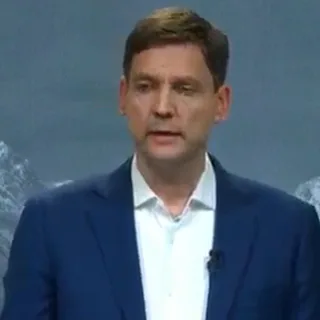
Eby leaned on the costing throughout the debate. Each quote below links to the moment in the broadcast.28
David EbyBC NDP 0:36:36▶ Watch
“We have a fully costed platform. … If you earn $200,000 a year, less than $4 a week … British Columbians should know that every dollar of that is allocated to improving services in our province.”
The $4 figure holds: on $200,000 the increase is about $3.69 a week, and we rated it Mostly true. The costing does not tie the tax to any spending line, though. The tax raises $2.15 billion over three years; the health-care lines total $590 million, and $715 million of new spending is still “to be announced.”
David EbyBC NDP 0:54:34▶ Watch
“It is in the costed platform.”
Eby had just promised a housing announcement on “increasing the construction of social housing.” Doerkson asked whether that should be in the platform already, and Eby said it was. Lowan replied, “I didn’t see in the platform.” The costing has no housing spending line; the only place such money could sit is “Measures To Be Announced.”
David EbyBC NDP 0:44:48▶ Watch
“LNG Canada phase two … will generate $28 billion for provincial revenues … that’s money I don’t have to ask you and your family in taxes for.”
The $28 billion is the party’s own figure, with no government source, and it is the basis of the plan’s major-project revenue line. Phase 2 is years from producing gas, so the plan’s near-term revenue from it is unexplained.
David EbyBC NDP 1:30:22▶ Watch
“Grow the economy and reduce wasteful administrative spending where we can.”
This was his answer on balancing the budget. The costing has no savings or efficiency line and no year in which the budget balances.
In the whole debate Eby never said forestry, forest, mill, resource road, recreation, trail or park. The only leader who raised forestry was Lorne Doerkson.28
Stills: CBC News, from the BC Broadcast Consortium debate broadcast of 14 October 2026, used for news reporting and commentary.
08 The other parties on the same items
The BC Greens published a full 74-page costed platform on 13 October. It would raise funding for BC Parks and Recreation Sites and Trails by half, from what it calls $76 million to $114 million, and create a $30 million-a-year Outdoor Recreation Infrastructure Fund for five years. Its $76 million base is the party’s own figure and does not match the $98.9 million division in the Estimates. It makes no commitment on resource roads.29
The Conservatives had published no costed platform as of 15 October 2026; the party’s platform page returned an error that day, and its commitments have come one announcement at a time. Its 2025 Policy Declaration says British Columbians “deserve guaranteed access to public lands and wild areas” and calls for open access for hunting, fishing and trapping on provincial Crown land. None of it is costed, and it does not mention Look West or resource-road funding.30
So on the day after the debate, one party had put a dollar figure on parks and recreation, none had put one on the roads, and none had funded Target 8.
09 The bottom line
The NDP’s costing does what its name says and little more. It shows how $2.6 billion of new spending over three years would be paid for, mostly with a tax increase that independent economists think will raise less than booked and a revenue line from major projects that the document never explains. It leaves the deficit almost exactly where the Ministry of Finance already had it, with no year of balance and no debt path.
For the backcountry, it is a step backwards from what the same party promised two years ago. The 2024 commitment to fund access roads and trails is gone, the parks and recreation budget stays cut, and the government’s own target for recreation access on resource roads goes into the election without a dollar, a date or a minister. If candidates want the backcountry vote, Target 8 is the place to start.
Share this story
These six images are made to be posted, and each carries part of the story: the headline finding, how the deficit forecast moved, the two soft revenue lines, the backcountry lines that are missing, the record on road money, and the recreation economy counted honestly.


Suggested caption
David Eby’s costed plan has $0 for backcountry roads, rec sites or Target 8, and it barely moves the deficit.
Its deficits land within about $18 million a year of the forecast the Finance Ministry had already published in September. It names no year of balance and no debt path.
Between 40 and 60 per cent of its new revenue is one unexplained line for major-project investment decisions. Its top-bracket tax is booked at $1 billion a year, while independent economists estimate $250 million to $700 million. A third of its new spending is “Measures To Be Announced.”
There is no money for resource roads, Recreation Sites and Trails, BC Parks or Target 8 of the government’s own outdoor recreation strategy. The party’s 2024 promise to fund access roads and trails is gone, and Budget 2026’s 6 per cent cut to parks and rec sites stays in place.
Ask the candidates in your riding whether they will put money, a date and a minister behind Target 8, and keep recreation access on resource roads.
backcountry.cx/editorials/ndp-costed-plan/
#BCpoli #BCElection #PublicLand #ResourceRoads #Target8
Sources
- ↩ BC NDP, “BC Strong Fiscal & Costing Plan,” two pages, published 14 October 2026; the server’s Last-Modified time is 12:27 PDT. Every line item, total and note quoted in this piece is from this document, and every share and difference is our arithmetic from it. bcndp.ca (PDF) · release: bcndp.ca
- ↩ BC NDP, “Build BC Strong” platform page, read 15 October 2026 (bcndp.ca/platform redirects to bcndp.ca/plan; no full platform document has been published). bcndp.ca/plan
- ↩ Canadian Press via Today in BC, “NDP release costed platform with added spending, new taxes on wealthy,” 14 October 2026; Global News, 14 October 2026; and CP via CTV News, “B.C. NDP election costings would see deficit fall to $12B in two years.” The first wire copy was timed at 15:40 PDT. todayinbc.com · globalnews.ca · ctvnews.ca
- ↩ Ministry of Finance, 2026/27 First Quarterly Report, 14 September 2026: the Updated Fiscal Plan (deficits of $13,759 million, $12,671 million and $11,988 million), Table A15 (taxpayer-supported debt and debt-to-GDP), debt-servicing expense, the economic outlook (0.9% real GDP growth in 2026 against a private-sector range of 0.4% to 0.8%), and p.10 and Table A1 on forest revenue ($472 million, “mainly due to lower stumpage rates”; an average stumpage rate of $13.55/m³, “down 11 per cent”; BC Timber Sales volume of 4.9 million m³ and revenue of $255 million). gov.bc.ca (PDF)
- ↩ Province of British Columbia, Budget and Fiscal Plan 2026/27–2028/29, 17 February 2026: Table 1.1 (deficits), the tax measures table (“Expand PST to certain professional services” from 1 October 2026, worth $261 million, $534 million and $563 million), the $5.0 billion Contingencies vote, the statement that the plan “does not include the provision of a forecast allowance,” the Economic Forecast Council’s view that a boost from major projects “would take several years to materialize,” Table A5 (forest revenue of $521 million and a stumpage rate of $15.24/m³ for 2026/27), and p.21 (the Stumpage Payment Deferral Program, 1 January to 30 November 2026). bcbudget.gov.bc.ca (PDF)
- ↩ CTV News / Canadian Press, “B.C. government delays controversial PST expansion,” 18 September 2026; and KPMG, “B.C. pauses PST expansion on professional services,” September 2026. ctvnews.ca · kpmg.com
- ↩ Province of British Columbia, Budget and Fiscal Plan 2024/25–2026/27 (22 February 2024, Table 1.1: a $6,288 million deficit for 2026/27) and Budget and Fiscal Plan 2025/26–2027/28 (4 March 2025, Table 1.1: $10,203 million); and the Public Accounts for 2024/25 (a deficit of $7,347 million, “$564 million lower” than budget) and 2025/26 ($7,700 million, “$3,212 million lower” than forecast, including $2,561 million of one-time tobacco-settlement revenue). Budget 2024 (PDF) · Budget 2025 (PDF) · Public Accounts 2024/25 (PDF) · Public Accounts 2025/26 (PDF)
- ↩ BC NDP, “An Action Plan for You,” the 2024 platform, created 3 October 2024: the costing table on p.63 (including a budget balance with commitments of −$9,611 million for 2025/26 and −$7,621 million for 2026/27) and p.59 on parks, recreation sites, trails and access roads. Read live on 15 October 2026. bcndp.ca (PDF)
- ↩ Global News, “B.C. pauses tax rebate,” 13 February 2025, on Finance Minister Brenda Bailey’s pause of the $1,000 household rebate, citing U.S. tariffs; and Canadian Press via CFJC, “B.C. cancels $1,000 grocery rebate, pauses hiring over tariff threats.” globalnews.ca · cfjctoday.com
- ↩ Province of British Columbia, Provincial Attachment System (more than 600,000 people connected since 2023; more than 77% attached); and CBC News via Yahoo News, “1.2M British Columbians have no family doctor,” 25 September 2026 (the Health Minister’s count of 1,259,425 people without a family doctor or nurse practitioner in April 2026). gov.bc.ca · yahoo.com
- ↩ BC NDP, “Build BC Strong: Eby will ask wealthy to pitch in a bit more,” 4 October 2026; and Daily Hive on the bracket detail (18.8% on income from $190,405 to $265,545, 22.5% from $265,545 to $1 million, and a new 24.5% bracket above $1 million, from the 2027 tax year). bcndp.ca · dailyhive.com
- ↩ Credit-rating reports published by the Province: S&P Global Ratings (downgrade from A+ to A, 2 April 2026, outlook negative); Moody’s (Aa1 to Aa2, 19 March 2026, negative), as hosted by BCI; Fitch Ratings (AA+ to AA−, rating report dated 24 April 2026, negative); and Morningstar DBRS (AA (high) to AA, 9 April 2026, stable). S&P (PDF) · Moody’s (PDF) · Fitch (PDF) · DBRS (PDF)
- ↩ The Globe and Mail, “Parties pitch contrasting income tax proposals,” 9 October 2026 (Trevor Tombe’s estimate of about $700 million before behavioural response and about $250 million after it); Canadian Press via Narcity, 9 October 2026 (Ross Hickey: independent estimates of $500 million to $700 million); and the Vancouver Sun, 5 October 2026 (David Freeman: maybe about $500 million). theglobeandmail.com · narcity.com · vancouversun.com
- ↩ Province of British Columbia, Budget and Fiscal Plan 2020/21–2022/23, Table 2.1: a new 20.5% rate on income over $220,000, up from 16.8%, costed at $216 million, $219 million and $224 million. bcbudget.gov.bc.ca (PDF)
- ↩ LNG Canada, “LNG Canada announces Phase 2 final investment decision,” 28 September 2026. lngcanada.ca
- ↩ CFJC Today, “What’s in the multi-billion dollar B.C.-Canada prosperity MOU,” 2 July 2026: Ottawa to cover “up to one-third,” capped at $3 billion, with support that may take the form of low-cost financing. The $2,831 million figure in the costing could not be found in any government source as of 15 October 2026. cfjctoday.com
- ↩ BC NDP, “Eby’s plan will cut gas prices 30 cents a litre,” October 2026 (a 10¢/L suspension of the provincial motor fuel tax); EY Tax News on the federal excise suspension (zero to 31 January 2027, then half rate to 31 March 2027); and the Vancouver Sun, 5 October 2026, for David Freeman’s full-year estimate of $672 million. bcndp.ca · taxnews.ey.com
- ↩ Times Colonist, “B.C. parties dodge the deficit as election promises pile up,” 13 October 2026 (Justin Wiltshire, UVic; Marc Lee, CCPA BC); and The Tyee, 15 October 2026 (Lee and Nancy Olewiler). timescolonist.com · thetyee.ca
- ↩ Province of British Columbia, Look West: B.C.’s Outdoor Recreation Strategy, May 2026: Target 8, p.21, and Target 1, p.13; p.6 for the strategy’s own $4.8 billion figure for 2023. gov.bc.ca (PDF)
- ↩ Hansard, B.C. Legislative Assembly, Issue 38, 9 April 2025 (afternoon): Forests Minister Ravi Parmar in estimates, at 7:45 p.m., answering Donegal Wilson; and Environment and Parks Minister Tamara Davidson in question period. Re-read on 15 October 2026. leg.bc.ca
- ↩ Hansard, B.C. Legislative Assembly, Issue 72, 28 May 2025 (afternoon): Premier David Eby on the forest road maintenance budget. leg.bc.ca
- ↩ Hansard, B.C. Legislative Assembly, Issue 141, 12 March 2026 (afternoon): Forests Minister Ravi Parmar on forest service road maintenance, “from $6.1 million in the 2022-2023 fiscal year to $16½ million in 2025-2026.” leg.bc.ca
- ↩ Province of British Columbia, 2026/27 Estimates, p.81 (Ministry of Environment and Parks: Conservation and Recreation Division, $98.936 million restated for 2025/26 and $93.018 million for 2026/27; Park Enhancement Fund, $13.0 million to $19.3 million) and pp.106–108 (Ministry of Forests: Provincial Operations, which includes “construction and maintenance of forest service roads and bridges,” $115.8 million to $113.7 million); and the 2026/27–2028/29 service plans of both ministries, which hold both lines flat to 2028/29. Estimates (PDF) · Environment service plan (PDF) · Forests service plan (PDF)
- ↩ BC NDP, “Eby outlines next steps for forestry,” 14 October 2026 (the “$120M” Forestry Jobs Protection Fund for “workers, mills, and communities”); and “Eby’s plan protects B.C.’s natural spaces, funds climate action,” 10 October 2026 (the $50 million Old Growth Protection Fund). bcndp.ca · bcndp.ca
- ↩ BC Stats, B.C. Outdoor Recreation Satellite Account, 2024 data (released 17 September 2026), table “Direct Value Added in 2024”: total direct real GDP of $6,646 million and “Total core outdoor recreation” of $2,322 million, in 2017 prices. The total includes supporting activities and “other” outdoor recreation such as spectator sports, festivals, concerts, theme parks and golf. catalogue.data.gov.bc.ca (CSV)
- ↩ Ministry of Forests, 2025 Economic State of the B.C. Forest Sector, September 2026, Table 19: forest-sector real GDP of $5.44 billion in 2024 and $5.04 billion in 2025, in 2017 chained dollars. gov.bc.ca (PDF)
- ↩ CP24 / Canadian Press, “B.C. forestry sector says industry at breaking point in letter to Premier David Eby,” 9 September 2026. The count of at least 21 lumber mills closed since 2023 is the industry’s own figure; no government count exists. cp24.com
- ↩ CBC British Columbia, “BC Leaders’ Debate 2026,” YouTube, streamed live 14 October 2026, produced by the BC Broadcast Consortium. Every timestamp in this piece is a time in this video and links to it. Quotes are from the broadcast captions as attributed in Backcountry Coalition’s transcript; the fact-check ratings are from our debate ledger. youtube.com/watch?v=_yknjPBXijU · backcountry.cx/editorials/leaders-debate-fact-check
- ↩ BC Green Party, 2026 platform, 74 pages, created 13 October 2026: p.46 (Tourism and recreation) and the costings table on p.73. The party’s $76 million base for BC Parks and Recreation Sites and Trails cites the Ministry’s 2025 Estimates notes and does not match the Estimates’ combined $98.9 million division. bcgreens.ca (PDF)
- ↩ Conservative Party of BC: the platform address conservativebc.ca/our-platform/ returned HTTP 404 on 15 October 2026; and the party’s 2025 Policy Declaration, s.11.12(a) and s.11.13(g). conservativebc.ca/our-platform · 2025 Policy Declaration (PDF)